

Week of 21–27 June 2026: The EU imposed major anti-dumping duties on chemicals from the US, China, and Saudi Arabia, while simultaneously loading over 5,000 future-dated regulatory controls, signalling a significant tightening for industrial and cultural goods.
Regulatory activity in the European Union this week was marked by a dual-pronged tightening of trade policy. The most immediate impact came from the imposition of severe new anti-dumping duties on key chemicals imported from the United States, China, and Saudi Arabia. This was accompanied by a massive, forward-looking regulatory wave, with over 5,000 future-dated changes loaded into the tariff system, primarily introducing new non-tariff controls for industrial sectors like machinery, chemicals, and steel.
The week in brief
After a quiet start dominated by routine seasonal tariff activations for fruit, the week erupted with significant regulatory action on four consecutive days. The overall posture was one of decisive tightening, executed through two distinct mechanisms. First, the imposition of high-impact trade defence measures targeting specific chemical imports. Second, and more broadly, a massive wave of forward-looking regulatory adjustments, with over 5,000 future-dated records introducing new controls and compliance requirements across key industrial sectors. This points to a deliberate strategy of increasing both the cost and complexity of importing certain goods into the Union.
What mattered most
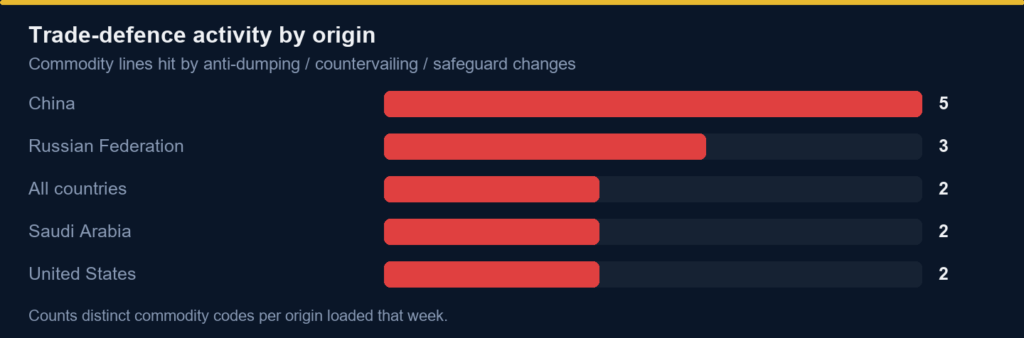
- Severe Anti-Dumping Duties on Chemicals: The most consequential action was the entry into force of definitive anti-dumping duties on butane-1,4-diol (HS 29053926) under Regulation R1373/26. Taking effect on 25 June, the measures impose substantial new costs on imports from key suppliers, with top duty rates reaching 142.5% for the United States, 113.7% for China, and 52.4% for Saudi Arabia. This represents a major new trade barrier for a chemical used widely in the production of plastics and fibres.
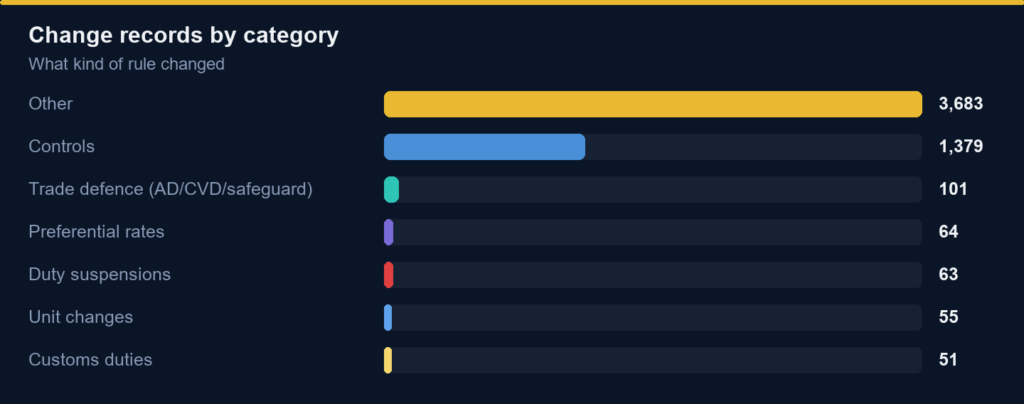
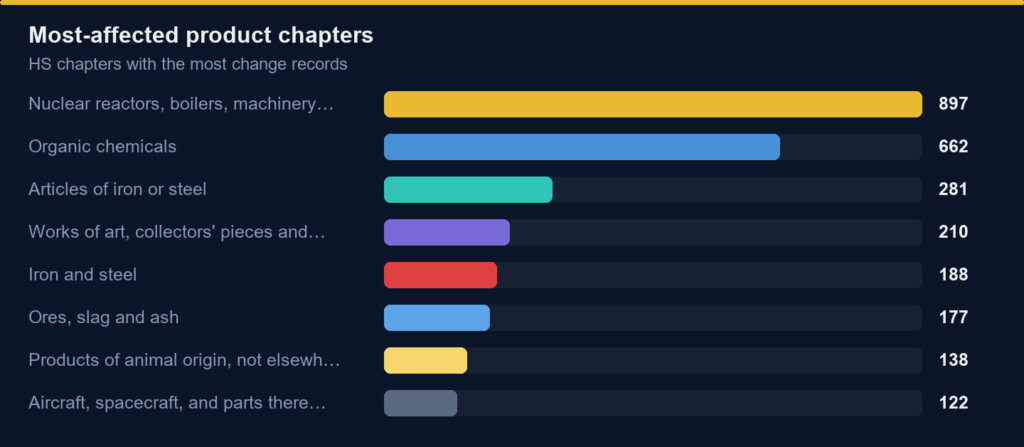
- A Massive Wave of Future Industrial Controls: On Tuesday, the TARIC system saw an influx of over 4,100 future-dated changes. This activity was not driven by new duties but by the addition of non-tariff measures, primarily new “Controls” and “Requirements/conditions”. The updates were highly concentrated in industrial sectors, with machinery (Chapter 84), organic chemicals (Chapter 29), and articles of iron or steel (Chapter 73) accounting for the bulk of the changes. This signals a large-scale, systemic update to the compliance landscape for these goods.
- New Controls on Art and Antiques: In a highly targeted move on Friday, all 73 regulatory changes detected were focused on Chapter 97 (Works of art, collectors’ pieces and antiques). The updates, based on regulations including R0880/19, introduced new certificate requirements and value-based conditions for imports from all non-EU countries, highlighting increased scrutiny on the provenance and certification of cultural goods.
Threads to watch
The high volume of future-dated changes loaded this week sets a clear agenda for the near future. A large cluster of new customs duties and duty suspensions for organic chemicals is scheduled to take effect on 1 July, marking the start of the EU’s semi-annual tariff update cycle. For importers, the immediate challenge of the new chemical duties will soon be followed by the broader task of integrating thousands of new non-tariff requirements for machinery, steel, and other industrial goods into their customs and supply chain processes. Finally, the unusual, hyper-focused regulatory action on cultural goods bears watching to see if this model of deep, sector-specific tightening becomes a recurring pattern.
By the numbers
Zolltor AI is an AI-powered global trade intelligence platform that helps European businesses stay ahead of changing tariffs, customs regulations, sanctions, and trade agreements. By combining artificial intelligence with official customs regulation, Zolltor AI converts complex global trade rules into clear, actionable insights that help companies understand business impact, reduce compliance risk, and make informed international trade decisions. Its mission is to make enterprise-grade trade intelligence accessible to every business—not just the Fortune 500.