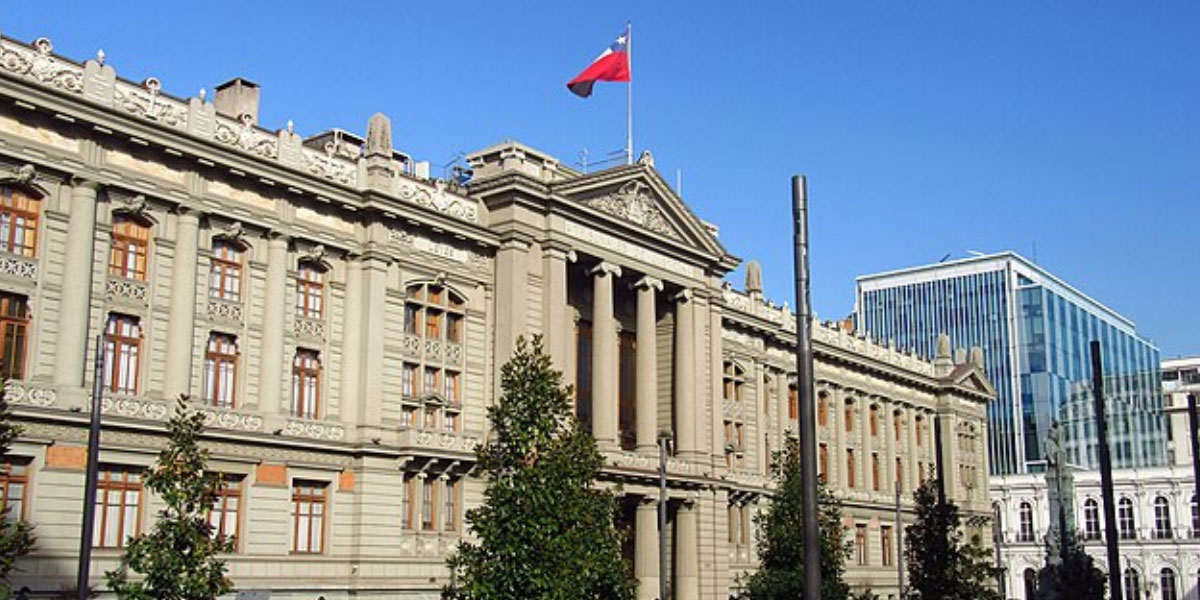



Chile's SII and Cochilco held a joint conference promoting advance pricing agreements for mining companies.
Chile’s tax authority (SII) announced on 20 July 2026 that SII and Chile’s Copper Commission (Cochilco) hosted a conference on 13 July 2026, aimed at encouraging major mining companies to enter into advance pricing agreements—formal contracts that let operators agree upfront with the SII on how they’ll price goods sold between their own subsidiaries abroad.
Twenty-four such agreements are now active as of July 2026, making Chile one of Latin America’s leaders in APA adoption under OECD standards.
What an APA actually locks in
An APA lets a Chilean taxpayer sit down with the SII before the year begins and negotiate the exact criteria for setting prices on related-party transactions. Both sides agree on what constitutes a “normal market price” for the transaction type—whether that’s a mineral sale, a service charge, or a royalty. Once signed, the company operates with legal certainty; the SII won’t second-guess the pricing method after the fact.
For mining especially, transfer pricing gets complicated fast. A copper sale between sister companies involves global market conditions, shipping costs, technical specifications, and pure supply-and-demand noise. An APA removes that guesswork by locking in the methodology before disputes arise. That certainty matters when you’re moving billions in annual revenue.
Mining accounts for 13.1% of Chile’s GDP and 59% of exports. Copper mining alone contributes 10% of tax revenue. Those numbers explain why the SII wants companies to use APAs—it reduces disputes that tie up both the company and the tax authority, freeing resources for actual compliance work.
How Cochilco and the SII divide the labour
Cochilco—the state copper research body run by technical market specialists—volunteered to share anonymised market data, historical pricing statistics, and sector analysis to help the SII understand what “normal” prices actually look like in copper and other mineral sales. The agency has decades of data on global copper markets, byproduct values, and trading conditions.
However, Cochilco doesn’t negotiate, sign, or enforce agreements. That’s entirely the SII’s job. The tax authority remains responsible for all review, negotiation, decision-making, monitoring, and termination of APAs. This division of labour—announced by Carolina Saravia Morales, Deputy Director of Auditing at the SII, and Karina Ochoa, Director of Auditing at Cochilco—ensures technical market expertise informs decisions without blurring accountability.
The two agencies want to jointly flag risks in mining deals before they become tax disputes, though both institutions keep their separate legal authority and decision-making power.
What deals qualify
Examples of transactions that could get an APA include cross-border mineral sales between related parties, payments to in-group traders or marketers, shared services and allocated costs within a group, and licensing fees for proprietary techniques or designs.
Companies interested in filing can submit an APA or BAPA (bilateral APA) application and email the SII’s Advance Pricing Agreements unit at area.apa@sii.cl.