


Week of 21–27 Jun 2026: A week of immense regulatory volume saw the UK implement key tariff preferences for Mexico under the CPTPP, while undertaking a vast administrative restructuring of steel tariffs and agricultural quotas, all with no new trade defence measures.
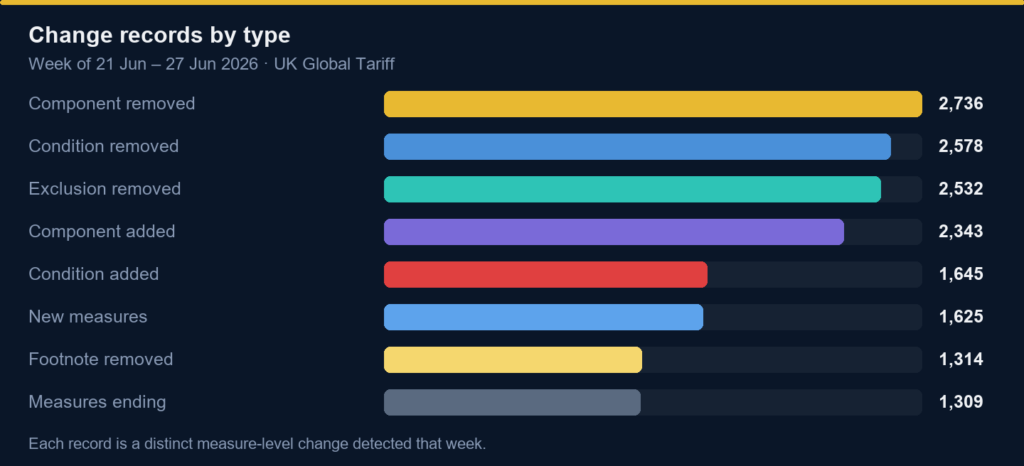
The UK’s trade landscape was reshaped by over 17,000 regulatory changes this week, a volume dominated by administrative restructuring and targeted policy implementation. The strategic headline was the activation of new 0% duty rates for Mexican beef and lamb, a major milestone in the UK’s accession to the CPTPP. This liberalisation occurred alongside a vast, foundational update to iron and steel tariffs and significant management of agricultural quotas, all while no new trade defence measures were introduced.
The week in brief
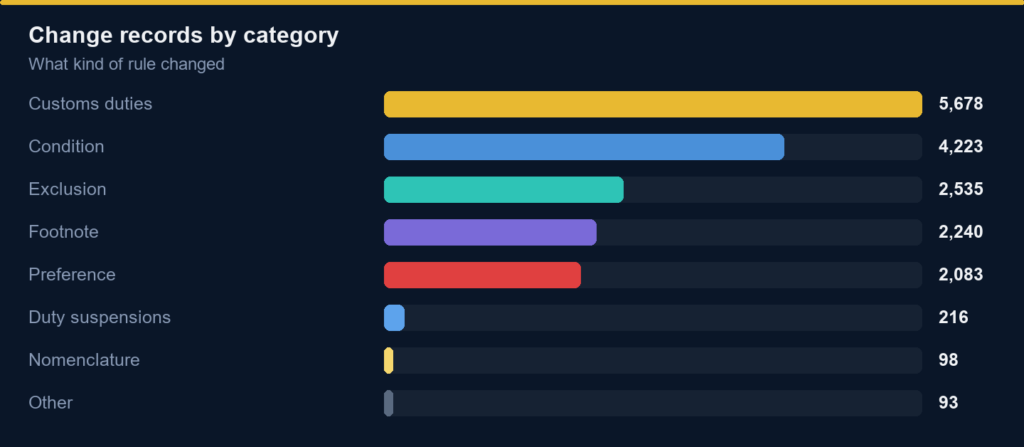
This week was characterised by immense regulatory volume and a dual focus on strategic liberalisation and large-scale administrative maintenance. With over 17,000 change records detected and more than 7,000 measures taking effect, the activity was intense but highly concentrated. The dominant theme was the continued operationalisation of the UK’s independent trade policy, most visibly through the implementation of new trade preferences under the Comprehensive and Progressive Agreement for Trans-Pacific Partnership (CPTPP). Simultaneously, regulators undertook massive housekeeping exercises, most notably a complete restructuring of customs duty measures for iron and steel and extensive updates to agricultural tariff rate quotas. The complete absence of new anti-dumping, countervailing, or safeguard measures underscored a week focused on structure and pre-agreed liberalisation rather than new protective actions.
What mattered most
CPTPP Activation for Mexico: The most significant development was the phased activation of preferential tariff rates for Mexico. On Monday, new 0% duty rates came into force for fresh, chilled, and frozen beef products. This was followed on Tuesday by 0% rates for a range of lamb products, including fresh, chilled, and frozen carcases and cuts. This marks a tangible step in integrating a key new partner into the UK’s trade framework under the CPTPP.
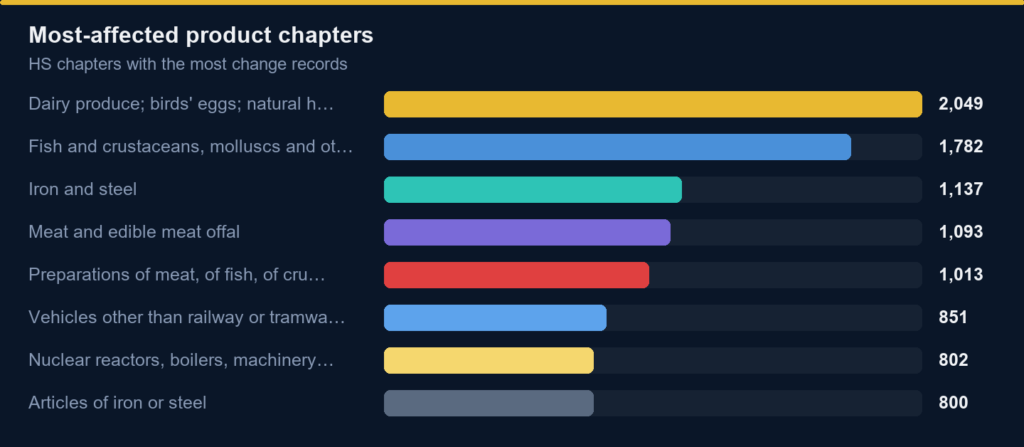
Vast Restructuring of Steel Tariffs: Wednesday saw a massive update to the tariff schedule for iron and steel, with over 1,800 changes concentrated in HS Chapters 72 and 73. The activity, which primarily involved adding new measures and components, points to a foundational administrative restructuring of the tariff framework for the entire sector rather than a simple change in duty rates.
Recalibration of Agricultural Trade: The agriculture and food sector saw constant activity. The week began with the expiry of preferential rates for meat and animal products for most CPTPP members, and ended with the expiry of preferences for Canadian pork. In parallel, regulators managed existing trade flows by extending the validity of dozens of tariff rate quotas for bovine meat and prepared for the future by loading new long-range quotas, signalling a complex and ongoing recalibration of market access for sensitive goods.
Threads to watch
New Quotas on the Horizon: A key development for importers is the set of new tariff rate quotas scheduled to take effect next week. Three new global TRQs loaded on Wednesday, and twelve more loaded on Friday, are all set to open on 1 July 2026. The latter group signals long-range planning, with annual openings scheduled out to 2031, providing predictability for future trade flows.
The CPTPP Rollout Continues: The activation of preferences for Mexico is a major milestone, but it is just one piece of the broader CPTPP implementation. Traders dealing with other member states should remain alert for subsequent tranches of tariff updates as the UK progressively rolls out the agreement’s terms across all partners.
Sector-Specific Housekeeping: The focused, high-volume updates in iron and steel on Wednesday, and the smaller-scale administrative changes in the meat sector on Saturday, suggest regulators may be working through the tariff book on a sectoral basis. This pattern of concentrated housekeeping could signal that other sectors may be slated for similar foundational updates in the coming weeks and months.
By the numbers

Zolltor AI is an AI-powered global trade intelligence platform that helps European businesses stay ahead of changing tariffs, customs regulations, sanctions, and trade agreements. By combining artificial intelligence with official customs regulation, Zolltor AI converts complex global trade rules into clear, actionable insights that help companies understand business impact, reduce compliance risk, and make informed international trade decisions. Its mission is to make enterprise-grade trade intelligence accessible to every business—not just the Fortune 500.