The trade deal imposes a 15% tariff on most EU imports and zero tariffs on key strategic goods, including aircraft, certain chemicals, generic drugs, semiconductors, and raw materials.
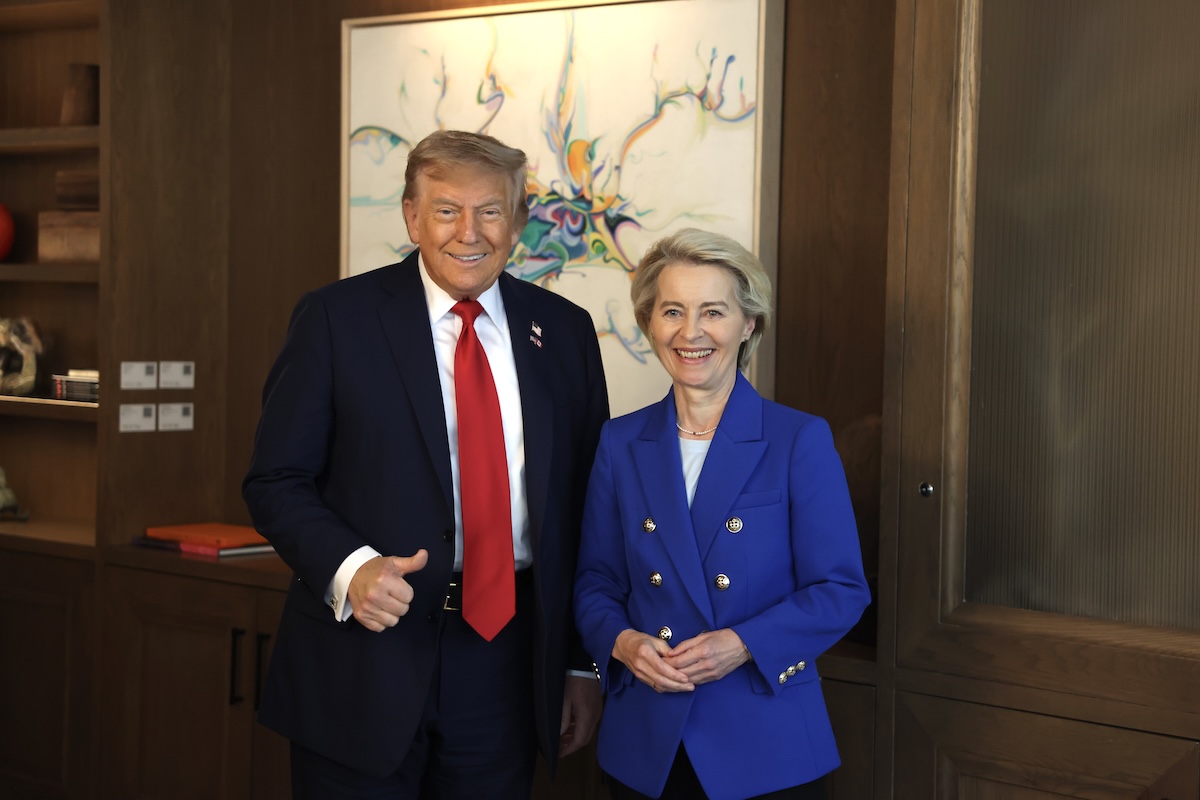
US President Donald Trump and European Commission President Ursula von der Leyen announced a new US-EU trade agreement on 27 July 2025.
The agreement sets a 15% US tariff on most EU imports, including cars, semiconductors, and pharmaceuticals, thereby avoiding a planned 30% reciprocal tariff that was set to take effect on 1 August 2025.
While broad tariffs remain in place, including on semiconductors and pharmaceuticals, several exceptions have been agreed upon. There will be no tariffs on aircraft, certain chemicals, generic drugs, semiconductor equipment, some agricultural products, and critical raw materials. The 50% steel and aluminium tariff remains, though the EU is pushing for a quota system instead.
Additionally, the EU committed to purchasing USD 750 billion in US energy and investing an additional USD 600 billion in the US.
“I think this is the biggest deal ever made,” Trump told reporters, praising the EU’s commitment to invest around $600 billion in the U.S. and significantly boost its imports of American energy and defence products.
Von der Leyen stated that the 15% tariff was applied “across the board”, later telling reporters it was “the best we could get. We have a trade deal between the two largest economies in the world, and it’s a big deal. It’s a huge deal. It will bring stability. It will bring predictability,” she said.
The deal follows the EU’s adoption of Commission Implementing Regulation (EU) 2025/1564 on 24 July 2025, which introduced new tariffs on select US goods in response to American safeguard tariffs. The regulation imposes new or higher import duties (4.4% to 30%) on certain U.S. products, to be implemented gradually from 7 August 2025 to 7 February 2026.
However, due to the trade agreement, this regulation is expected to be amended or potentially not enforced.
The U.S. may maintain the aircraft tariff at 0%, pending review, and there’s a good chance it will not rise to the initially considered 15%. The EU has also agreed to reduce non-tariff barriers on autos and agricultural goods, though the specifics are still being negotiated.
This deal averts Trump’s earlier threat to impose a 30% tariff on EU imports starting August 1, which would have triggered EU countermeasures on USD 109 billion of US goods.