Singapore’s Finance (Income Taxes) Act 2025 introduces a broad range of measures, including corporate and personal tax rebates, extensions and enhancements of key incentives, new deductions for innovation and green activities, and alignment with international tax standards such as OECD Pillar 2 and the Crypto-Asset Reporting Framework, with most provisions effective from YA 2025/2026.
Singapore gazetted the Finance (Income Taxes) Act 2025 on 12 December 2025, enacting the Budget 2025 measures announced in February 2025.
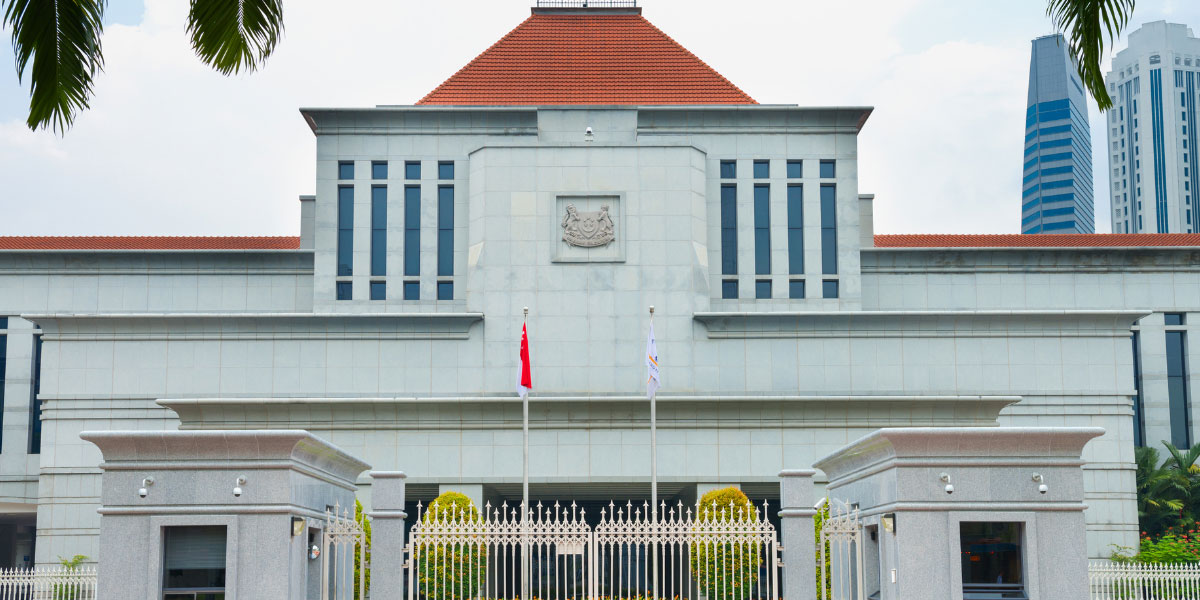
The Finance (Income Taxes) Act 2025, passed by the Parliament of Singapore in late 2025, introduces a range of changes to the nation’s tax landscape. The legislation primarily targets the Income Tax Act, 1947, and the Multinational Enterprise (Minimum Tax) Act, 2024, with a focus on corporate competitiveness, individual support, and alignment with international tax standards. Several measures also align Singapore’s tax framework with international standards, including the OECD Pillar 2 and the Crypto-Asset Reporting Framework (CARF).
OECD alignment and international reporting
- Pillar 2 implementation: Amendments to the Multinational Enterprise (Minimum Tax) Act 2024 align with OECD Pillar 2 guidance, covering flow-through and securitisation entities, ensuring Singapore complies with global minimum tax standards.
- Crypto-asset reporting framework (CARF): Provisions enable the collection and automatic exchange of crypto-asset information with other jurisdictions, enhancing transparency and tax compliance for digital assets.
Corporate and personal tax rebates
- Corporate income tax (CIT) rebate: Eligible companies receive a 50% rebate for YA 2025, with a minimum of SGD 2,000 and a maximum of SGD 40,000. This encourages companies to maintain or expand local employment.
- Personal income tax (PIT) rebate: Tax-resident individuals get a 60% rebate on tax payable for YA 2025, capped at SGD 200 per taxpayer, to reduce the immediate tax burden on residents.
New and updated corporate deductions
- Employee equity-based remuneration (EEBR): Companies can claim deductions for payments to a holding company or SPV for the issuance of new shares to employees, supporting talent retention and equity-based compensation.
- Cost-sharing agreements (CSA): A new section allows companies to claim deductions for payments made under approved innovation cost-sharing agreements. These agreements involve related parties sharing expenses for qualifying activities, such as research, software development, and design. There is a 100% deduction for payments under approved agreements for innovation projects that promote collaborative R&D.
- Anti-corruption measures: Expenses related to corruption offences are explicitly non-deductible, reinforcing compliance and ethical standards.
Incentives for investment, listings, and funds
- Financial sector incentive (FSI) companies: New 15% corporate tax tier and enhanced 5% rate for new fund managers listing in Singapore to attract capital market participants.
- Listing incentives: CIT rebates for new corporate listings (20% for primary, 10% for secondary), capped based on market capitalisation, incentivising high-value IPOs in Singapore.
- S-REITs and S-REIT ETFs: Tax concessions extended to 2030, including income transparency and foreign-source income adjustments, supporting the real estate investment market.
Extensions of key tax incentives
- Double tax deduction for internationalisation (DTDi): Extended to 31 December 2030, this allows companies to claim a 200% deduction on qualifying market-expansion and investment-development expenses, incentivising global business growth.
- Mergers and acquisitions (M&A) scheme: Extended to 2030 to promote corporate acquisitions that strengthen business capabilities.
- Section 13W of the ITA: Sunset date removed, now covering gains from preference shares and allowing group-level assessment, giving companies certainty over non-taxation of qualifying disposal gains.
- Land intensification allowance (LIA): Extended through 2030, with lower shareholding thresholds, to encourage property redevelopment and higher land productivity.
Administrative and compliance updates
- Electronic filing: Corporate taxpayers must submit electronically; support is provided for those without technical capability, improving efficiency.
- Partnerships and trusts: Now included in arm’s length and transfer pricing rules to ensure proper tax treatment.
Green initiatives
- Green certificates and credits: To support sustainability, businesses can now claim deductions for qualifying expenditures related to the acquisition and surrender of prescribed green certificates or credits starting from YA 2026
Most measures apply from YA 2025-2026, with some phased in from 19 February 2025 or 1 January 2026.
Earlier, Singapore’s Senior Minister of State for Finance presented second reading opening remarks on the Finance (Income Taxes) Bill at the parliament on 6 November 2025.