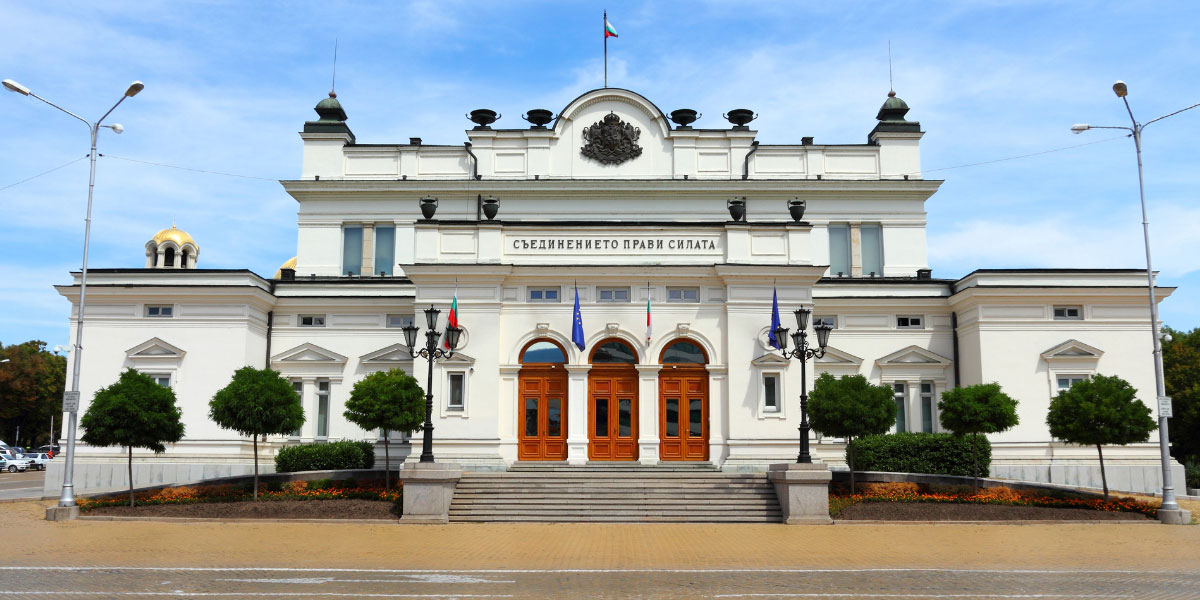



Bulgaria's National Assembly has accepted a bill for consideration that would add the primary top-up tax, secondary top-up tax, and national domestic top-up tax to the taxes covered by the Convention on Mutual Administrative Assistance in Tax Matters.
The Bulgarian National Assembly on 1 September 2026 accepted for consideration Bill No. 52-602-02-16, which would amend the law ratifying the Convention on Mutual Administrative Assistance in Tax Matters, as amended by the 2010 protocol.
The proposal would update Annex A of the Convention to include the primary top-up tax, secondary top-up tax, and national domestic top-up tax introduced under the Global Anti-Base Erosion (GloBE) Model Rules for OECD Pillar Two.
The Convention, as amended by the 2010 protocol, entered into force in Bulgaria on June 1, 2011. The proposed amendment would take effect on the date of its promulgation in the State Gazette.
Information exchange
The legislative change would provide the legal basis for Bulgaria to participate in automatic information exchange under the OECD’s Multilateral Competent Authority Agreement on the Exchange of GloBE Information (GIR MCAA).
Bulgaria incorporated the OECD Global Anti-Base Erosion (GloBE) rules into Part Five “a” of its Corporate Income Tax Act (CITA), with the rules applying from 1 January 2024 and the secondary top-up tax applying from 1 January 2025.
Although the three top-up taxes are included within CITA, they have separate tax bases, scopes and collection mechanisms. The proposal therefore treats them as new taxes for the purposes of Annex A of the Convention.
The amendment would also support centralised filing arrangements for multinational enterprise (MNE) groups. In particular, groups with ultimate parent entities outside the EU could submit a single GloBE Information Return centrally instead of making separate filings in Bulgaria.
The measure is expected to reduce compliance costs for businesses and administrative processing requirements for the National Revenue Agency (NRA).
The proposal would not require any expenditure from the state budget.
Once the amendment enters into force, Bulgaria’s Minister of Foreign Affairs would be authorised to notify the Secretary-General of the OECD through diplomatic channels.