



Week of 30 Aug – 5 Sep 2026: A massive, multi-day administrative update to iron and steel tariff quotas defined the week's regulatory activity, alongside the scheduled expiry of several anti-dumping duties and the start of new agricultural quotas for September.
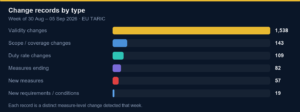
The first week of September was dominated by one of the year’s largest regulatory updates, a massive administrative project focused on iron and steel tariff quotas that unfolded over several days. This technical exercise, involving over 1,500 records, overshadowed other significant start-of-month changes, which included the scheduled expiry of anti-dumping duties on Chinese thermal paper and chemicals from South Korea and Mexico. The transition into September also saw a large number of new agricultural quotas and seasonal entry prices take effect, marking a week of intense administrative maintenance and scheduled policy transitions.
The week in brief
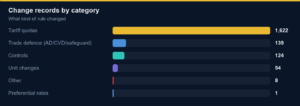
After a silent end to August, regulatory activity exploded this week, driven by a massive administrative project focused on the EU’s iron and steel tariff quota system. A single update on Wednesday contained nearly 1,900 changes, the vast majority of which were technical adjustments to steel quotas, with follow-on updates continuing through Friday. This intense administrative focus overshadowed the week’s other major theme: the start-of-month transition. This brought a wave of new agricultural quotas and seasonal prices into force, alongside the scheduled expiry of several significant trade defence measures, creating a new landed-cost reality for importers of the affected goods.
What mattered most
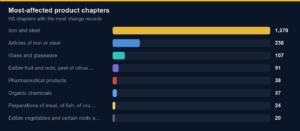
Massive iron and steel quota administration: The defining event of the week was a large-scale technical update to tariff quotas for products in Chapters 72 (Iron and steel) and 73 (Articles of iron or steel). The project began with an update of over 1,500 records on Wednesday, primarily validity and scope changes. It continued with smaller, targeted updates under Regulation R1457/26 on Thursday and Friday, which were made effective retroactively. These subsequent actions included new 0% tariff quotas for certain flat-rolled steel products from the United Kingdom and India, and duty rate changes for products from origins including China, South Korea, and Turkey.
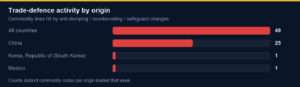
Trade defence measures expire: The start of the month saw the scheduled expiry of several anti-dumping measures, effective 1 September. These included duties on:
- Terephthalic acid (HS 2917360011) from South Korea and Mexico.
- Lightweight thermal paper (including HS 4809900010 and 4811900010) from China.
Additionally, measures on glass fibre products (Chapter 70) were adjusted, with conditions ending for goods consigned from Morocco and Turkey, while the scope was altered for several Balkan countries.
Start-of-month agricultural measures take effect: A significant number of previously scheduled measures became active at the start of September, concentrated in the agricultural sector. Key changes included new tariff rate quotas for grape juice from all non-EU origins, zero-duty quotas for wine from South Africa, and a new quota for plums from Norway. This was followed by the activation of routine seasonal entry prices on 2 September for fresh produce including tomatoes, lemons, and table grapes from various origins.
Threads to watch
The primary focus for importers remains on the iron and steel sector. After a week of sustained, high-volume administrative changes under Regulation R1457/26, the key question is whether this period of intense technical adjustment has concluded or if further updates will follow. For importers of chemicals, paper, and glass fibre products, the focus will be on assessing the new landed-cost landscape following the expiry and adjustment of long-standing trade defence measures. Finally, a small number of future-dated agricultural quotas for tomatoes and grapes from Lebanon and Morocco were loaded this week, setting the stage for further changes in October and November.
By the numbers

Zolltor AI is an AI-powered global trade intelligence platform that helps European businesses stay ahead of changing tariffs, customs regulations, sanctions, and trade agreements. By combining artificial intelligence with official customs regulation, Zolltor AI converts complex global trade rules into clear, actionable insights that help companies understand business impact, reduce compliance risk, and make informed international trade decisions. Its mission is to make enterprise-grade trade intelligence accessible to every business—not just the Fortune 500.


