

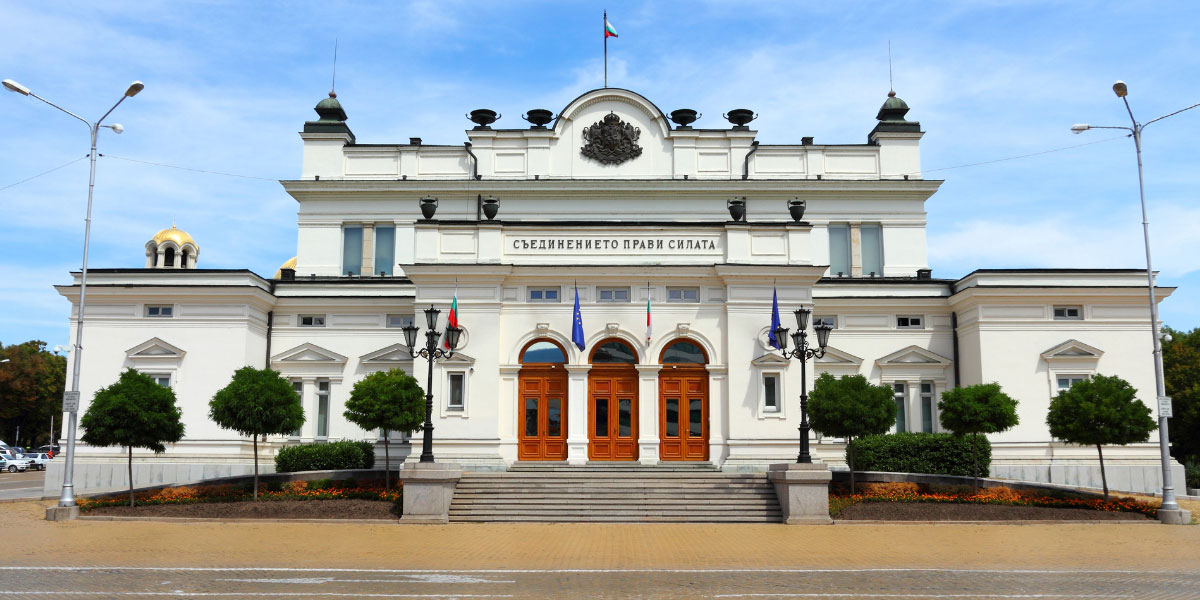
The decision has been forwarded to the National Assembly, and a new budget process will begin once the parliament responds.
Bulgaria’s government announced the withdrawal of its proposed 2026 State Budget, along with the draft Social Security and National Health Insurance budgets, after widespread protests against planned tax and social contribution increases on 2 December 2026.
The decision has been forwarded to the National Assembly, and a new budget process will begin once the parliament responds.
Demonstrations took place across Sofia and other major cities, with critics arguing that the planned tax measures, introduced to support higher public spending, would burden citizens and reflect deeper issues of state corruption.
The withdrawn budget was also notable as the first to be drafted in Euros ahead of Bulgaria’s expected adoption of the currency on 1 January, a change that nearly half of the population reportedly opposes due to concerns about price increases and national sovereignty.
The Draft State Budget Act for 2026 outlined several tax-related changes aimed at tightening compliance and reshaping incentives. Under the proposed amendments to the VAT Law, businesses that rely on sales management software were required to use only government-approved systems, with penalties for those that fail to meet the new standard.
Looking ahead to the 2026–2028 period, the medium-term fiscal plan introduced a more advantageous tax depreciation model for electric vehicles, capping annual depreciation at 50% to encourage cleaner transport options. The proposal also raised the withholding tax on dividend income and liquidation proceeds from 5% to 10%, with the increase scheduled to apply from 1 January 2026.
Earlier, Bulgaria’s Ministry of Finance released the draft State Budget Act for 2026 and updated the medium-term budget forecast for 2026-2028, both published on the Ministry’s website on 3 November 2025.